
OPTICAL RFID
Optical RFID: UHF RFID that uses light to choose which tags to read
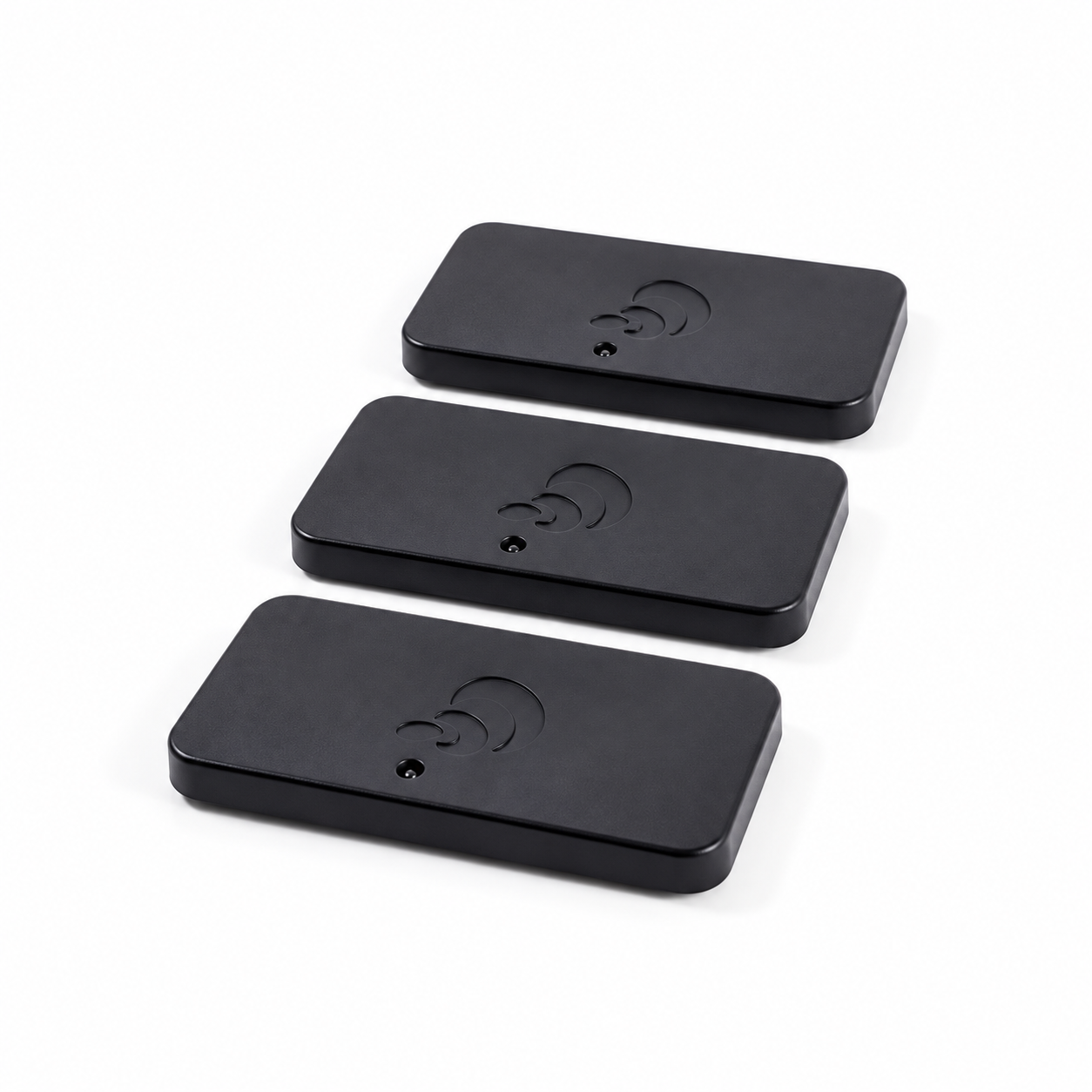
An Optical RFID tag has an optical receiver. When the reader's LED antenna sends a light signal, only tags that receive both the RF signal and the light respond. A lens tube sets the lit area, and tags within that area are selected for reading. Actual throughput depends on tag count and installation conditions. The tags are battery-free and passive.
The problem
UHF RFID signals travel far, so on conveyors and dense shelves the reader also picks up tags next to the one you want (stray reads). Turning power down makes you miss tags instead.
How it works
An Optical RFID tag has an optical receiver. When the reader's LED antenna sends a light signal, only tags that receive both the RF signal and the light respond. A lens tube sets the lit area, and tags within that area are selected for reading. Actual throughput depends on tag count and installation conditions. The tags are battery-free and passive.
System
Readers: IDRO900V (fixed 4-port), IDRO900H / H-BT (handheld), IDRO900OI (integrated, coming soon). LED antennas: ANT45LEDZ (up to 30 cm), cylindrical IDRO-VLC919 (up to 5 m). Tags: VLC900 series (general and metal).
Availability
Current Optical RFID tags and LED antennas are specified for the Korean band (917–921 MHz). Ask us about other regional bands.
Standard
The core Optical RFID technology is adopted in TTA standard TTAK.KO-10.1157 Part 1·2 (Hybrid Optical-RF Tag based Application Service for Wireless Identification).