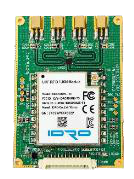
Sensitivity and read rate are Impinj public reader-chip specifications (chip level), not module measurements. Module selection guide ↗
Compare the specifications. Understand the evidence.
Review two modules, their differences and the questions still to resolve.
Item
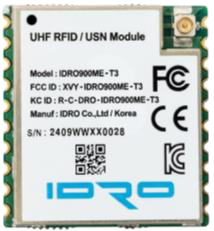
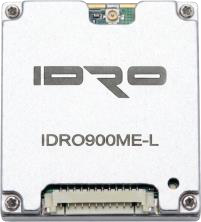
IDRO900ME-L
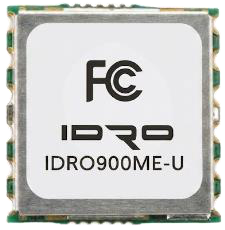
IDRO900ME-U7
RFID chip
Impinj E710
Impinj E710
Rx sensitivity (chip)
−98 dBm ¹
−98 dBm ¹
Multi-tag read rate (chip)
1,100+ tags/s ¹
1,100+ tags/s ¹
Size · weight
36.0 × 40.5 × 7.7 mm · 16 g
15.0 × 15.0 × 2.15 mm · 1 g
Supply current @ +30 dBm
1,300 mA
1,000 mA
Antenna connection
microFL
SMD pad
FCC ID
XVY-IDRO900ME-L
XVY-IDRO900ME-U7
Sensitivity and read rate are Impinj public reader-chip specifications (chip level), not module measurements. ¹ Impinj E910/E710/E510/E310 Reader Chip Datasheet v6 (2026-11-06), public chip specification measured at the chip receive pin. Not a module or reader measurement. ² Impinj Reader Chip Portfolio public specification. Chip-level value; test conditions differ from the Ex10 datasheet.
02 / EXPLORE YOUR DEVELOPMENT PATH
One module. Your choice of configuration.
Choose a module and port configuration to view the actual board.
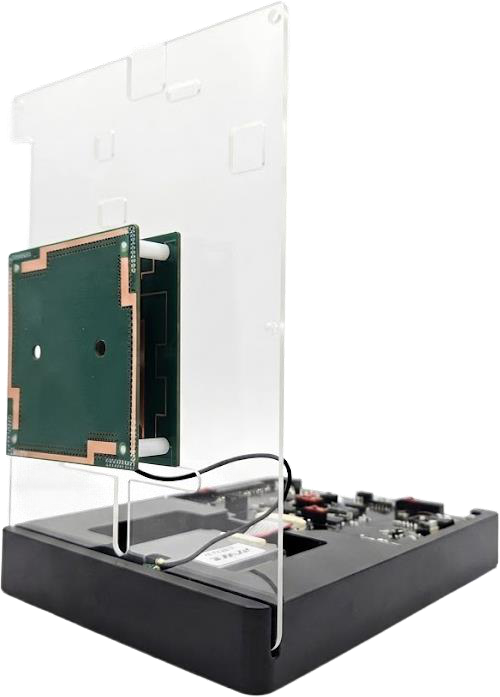
1-port and 4-port EVMs for ME-T and ME-U. The module itself has one antenna pin. Confirm compatible versions and EVM contents before ordering.
YOUR CONFIGURATION
ME-T + 4 ports
EVM-board configuration for multiple antenna connections.
03 / DEVELOP WITH IDRO
Choose a module. Then evaluate your integration.
Explore the documentation and evaluation hardware together.
EVALUATION
EVM evaluation kit
Evaluate module operation and performance. Ask about model-specific USB/UART boards, SDK/GUI availability and kit contents.
Start with the way you work, then explore models within that family.
IDRO / READER COLLECTIONProduct image
Fixed · Impinj E710
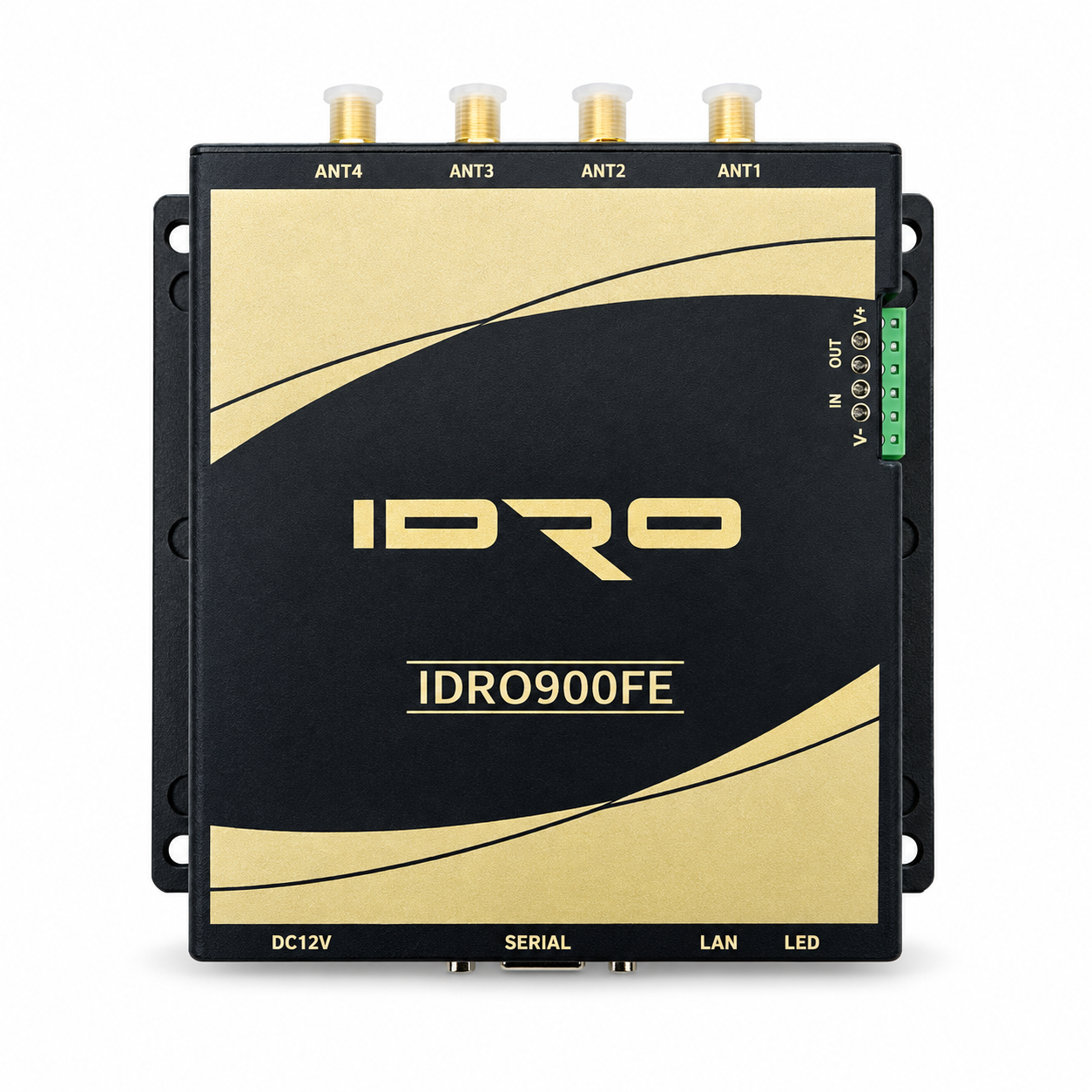
IDRO900FE
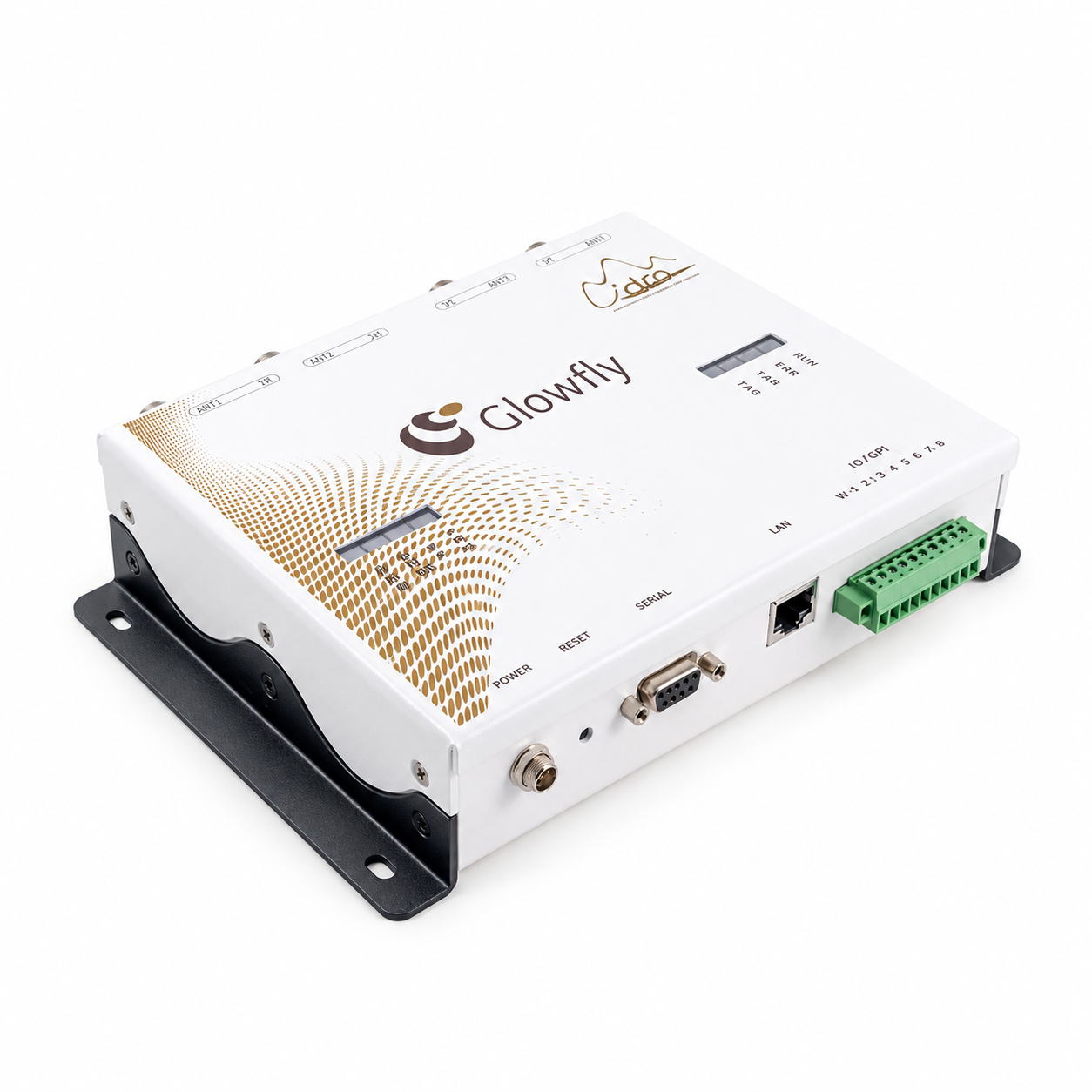
IDRO900FE Fixed 4-Port UHF RFID Reader
IDRO900FE is a fixed 4-port UHF RAIN RFID reader based on the Impinj E710. It connects over Ethernet 10/100 and RS-232C and drives sensors and stack lights through 2 GPIO inputs and 2 outputs. It runs Linux 5.15 on a Cortex-A5 processor and measures 135.9 × 126.4 × 35 mm, under 557 g.
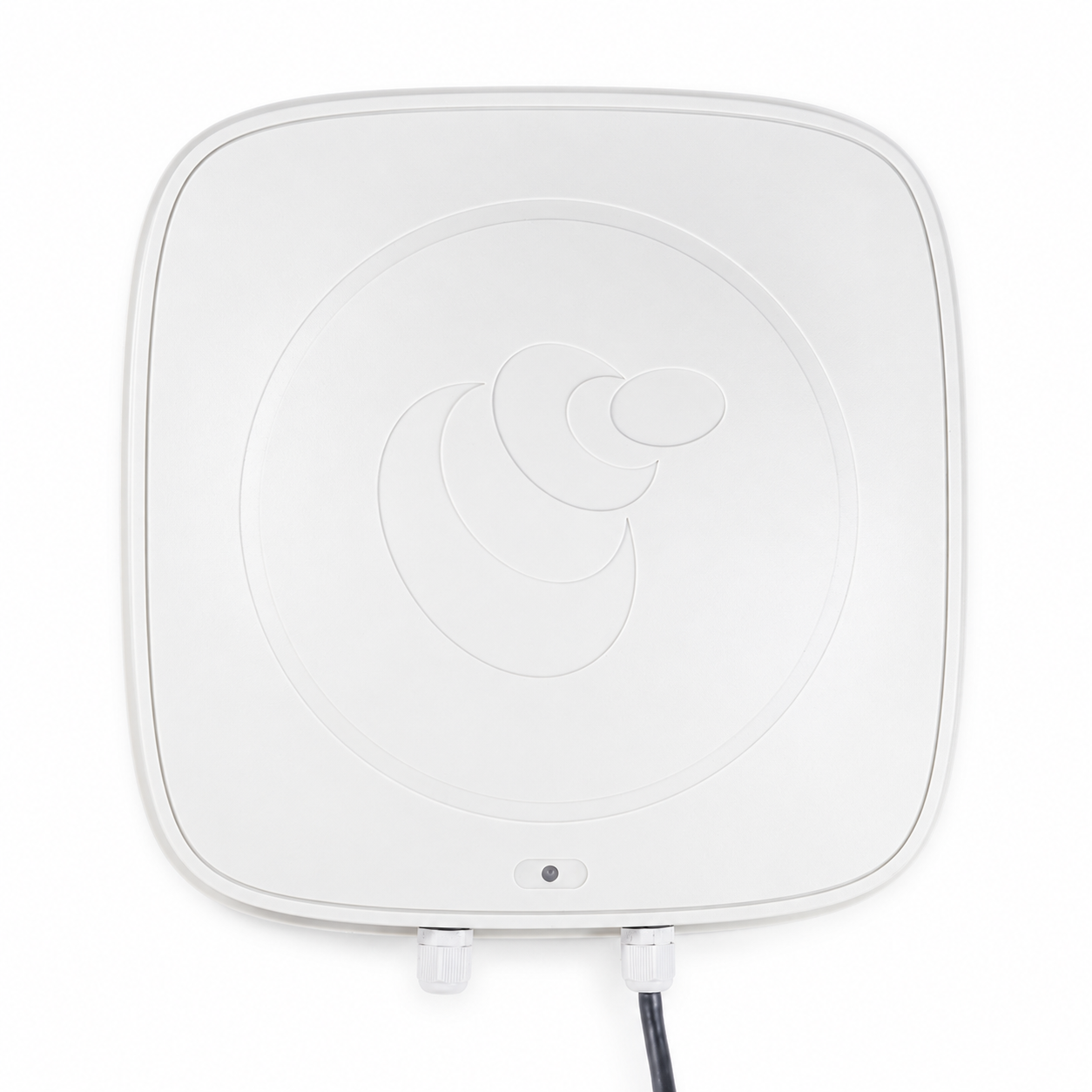
IDRO900EAE Integrated-Antenna UHF RFID Reader (export model)
IDRO900EAE is an all-in-one UHF RAIN RFID reader with a built-in 6 dBi circularly polarised antenna. It is based on the Impinj E710 and runs power and data over a single PoE (IEEE 802.3af) cable. It is IP65-rated and sold for export markets only.
IDRO900RWe USB / Bluetooth Desktop RFID Reader/Writer
IDRO900RWe is a desktop UHF RAIN RFID reader/writer based on the Impinj E310. It connects to PCs and mobile devices over USB-C (virtual COM port) or Bluetooth 5.0 and reads up to 1.5 m for tag encoding and inspection at the desk.
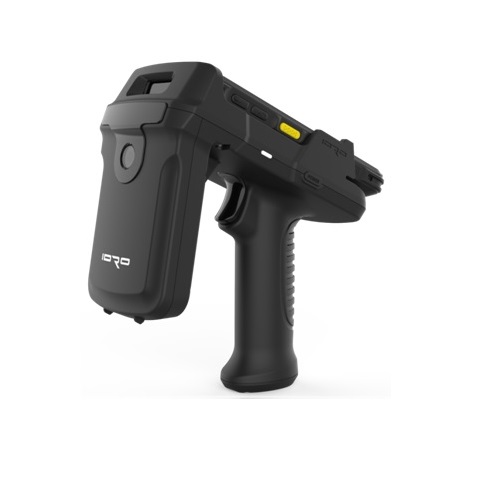
The IDRO900H series are pistol-grip handheld UHF RAIN RFID readers. IDRO900H is integrated with a dedicated Android PDA and uses the Impinj R2000. IDRO900H-BT pairs with smart devices over Bluetooth 5.0 and uses the Impinj E710. Both support Optical RFID, which reads only the tags the reader's light falls on (up to 2.3 m).
Frequency
860–930 MHz
Optical RFID
Supported, max. 2.3 m
Connectivity
Bluetooth 5.0 Dual mode, USB 2.0 VCP, smart-device mount
IDRO900V is a fixed 4-port UHF RAIN RFID reader based on the Impinj R2000, with four LED communication ports for Optical RFID. Only tags lit by the LED antenna respond, which reduces stray reads of neighbouring tags on conveyors and in close-pitch installs. It also works as a standard Gen2 reader.
Frequency
860–960 MHz
Output
+5 to +30 dBm, 1 dB steps
I/O
4 in / 4 out, 4 LED communication ports, opto-isolated
IDRO900OI Integrated Optical RFID Reader (coming soon)
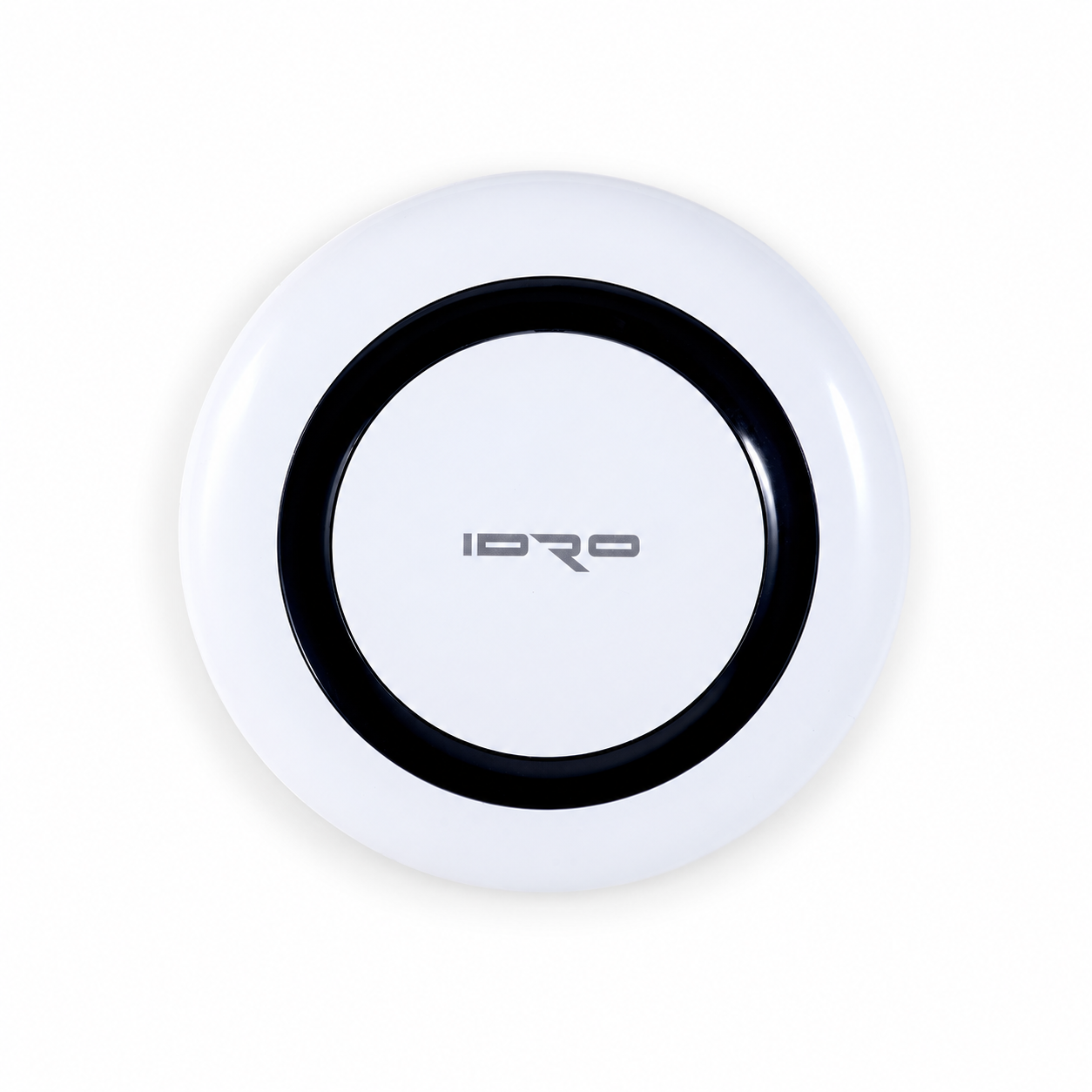
IDRO900OI is an integrated UHF RAIN RFID reader for factories that combines the RFID antenna, optical LEDs (SMD and DIP) and the reader module in one housing. It is based on the Impinj R2000, installs over a single PoE cable, and uses industrial M12/M8 circular connectors (IP54 design). KC, FCC, CE and TELEC certification is in progress (target: end of 2026).
Beyond reading more. Select what you want to read.
Optical RFID · Visible-light-assisted selection
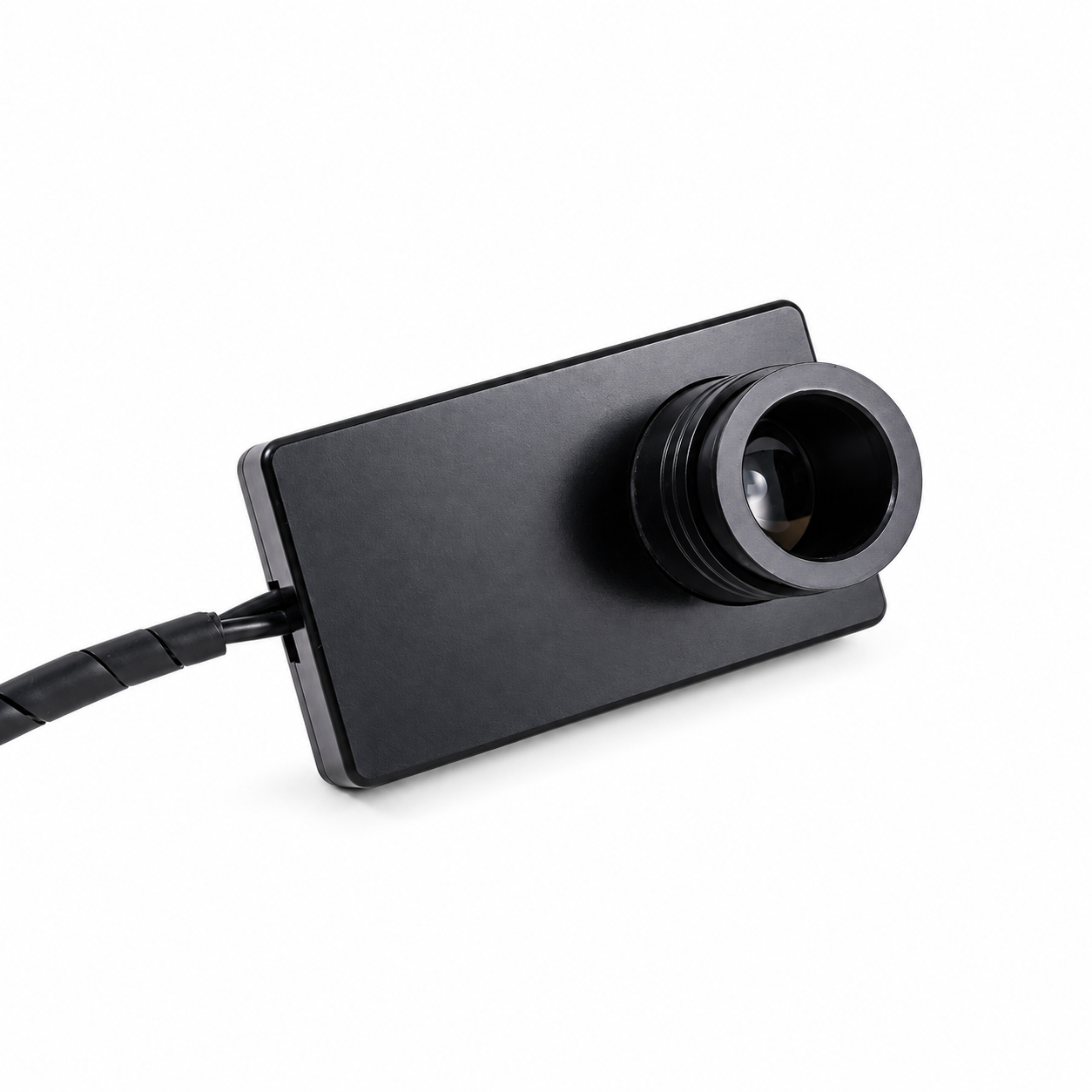
An Optical RFID tag has an optical receiver. When the reader's LED antenna sends a light signal, only tags that receive both the RF signal and the light respond. A lens tube sets the lit area, and tags within that area are selected for reading. Actual throughput depends on tag count and installation conditions. The tags are battery-free and passive.
01Nearby tags are present
02Select the target with light
03Check the compatible tag response
Current Optical RFID tags and LED antennas are specified for the Korean band (917–921 MHz). Ask us about other regional bands. The core Optical RFID technology is adopted in TTA standard TTAK.KO-10.1157 Part 1·2 (Hybrid Optical-RF Tag based Application Service for Wireless Identification).
Sensitivity and read rate are Impinj public reader-chip specifications (chip level), not module measurements.
06 / ABOUT IDRO
RFID technology for your products and your site.
From reader modules to finished readers, antennas and tags. Discuss an approach based on your design and operating conditions.
Founded 2008 · HQ and R&D in Sejong, sales office in Suwon
IDRO = IDentification with Radio and Optical
Impinj Gold Partner
Core Optical RFID technology adopted in TTA standard TTAK.KO-10.1157 Part 1·2 (Hybrid Optical-RF Tag based Application Service for Wireless Identification)
RAIN RFID refers to passive UHF RFID technology based on GS1 UHF Gen2 / ISO/IEC 18000-63. IDRO offers embedded modules and readers for field applications.



 01 / L